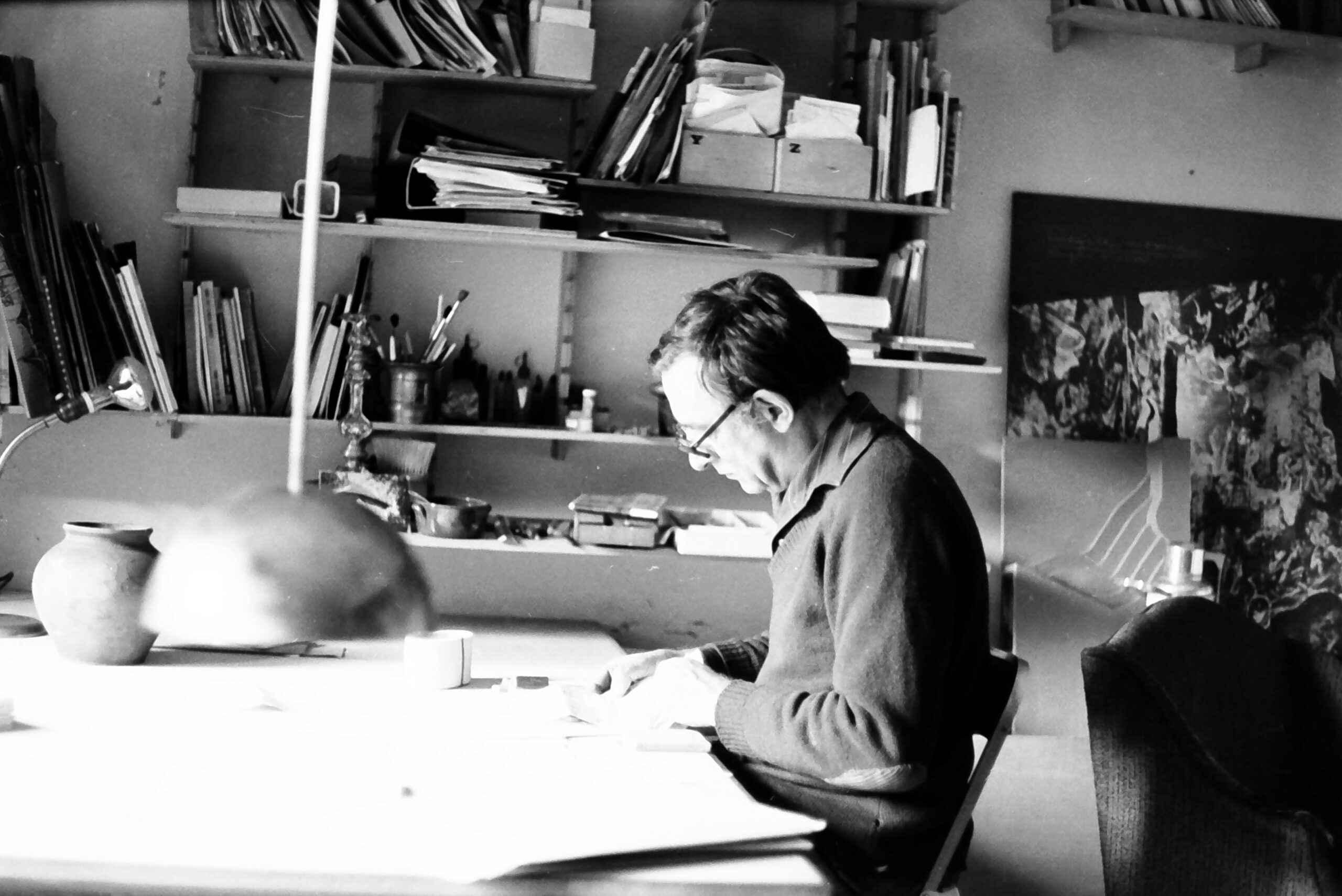
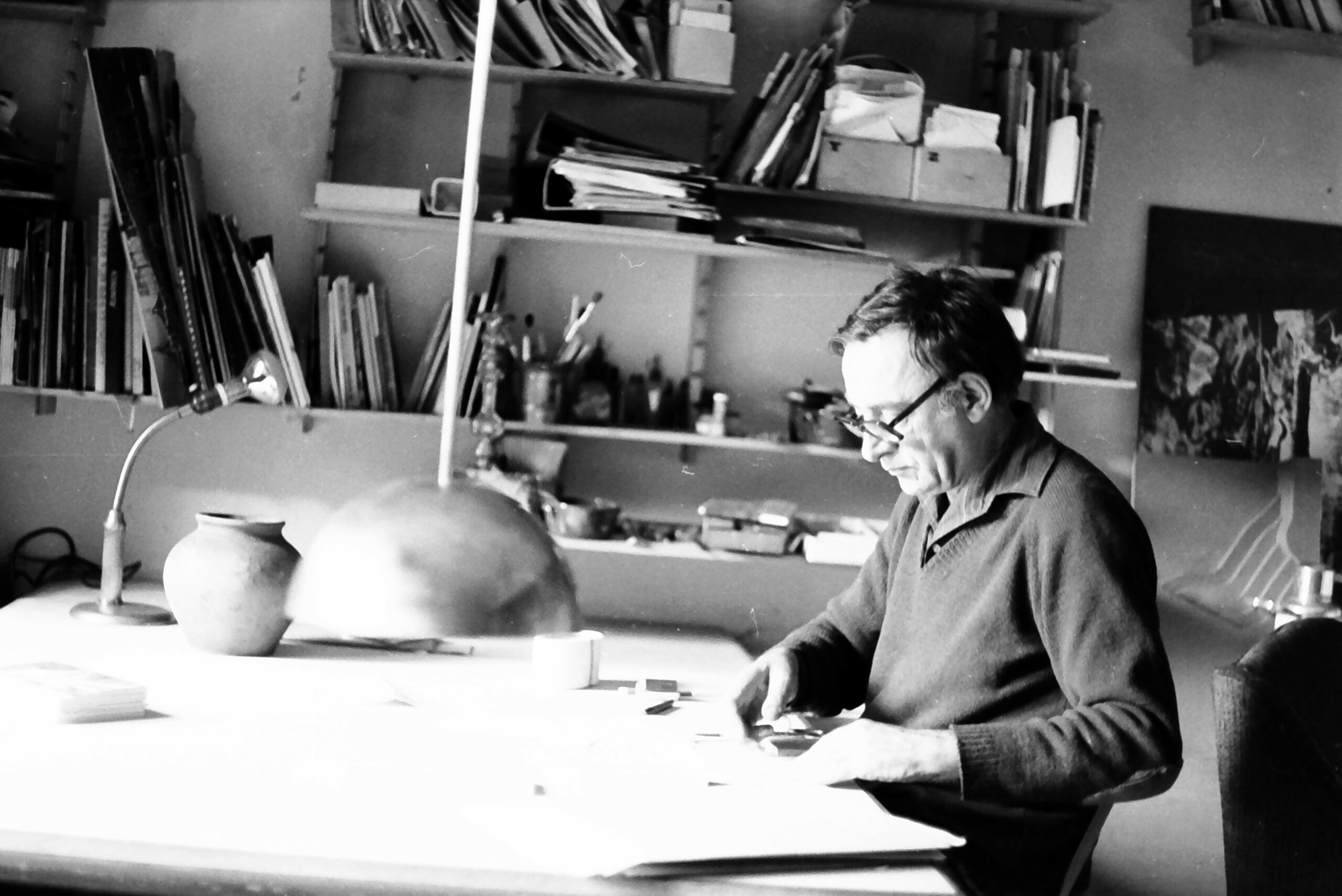
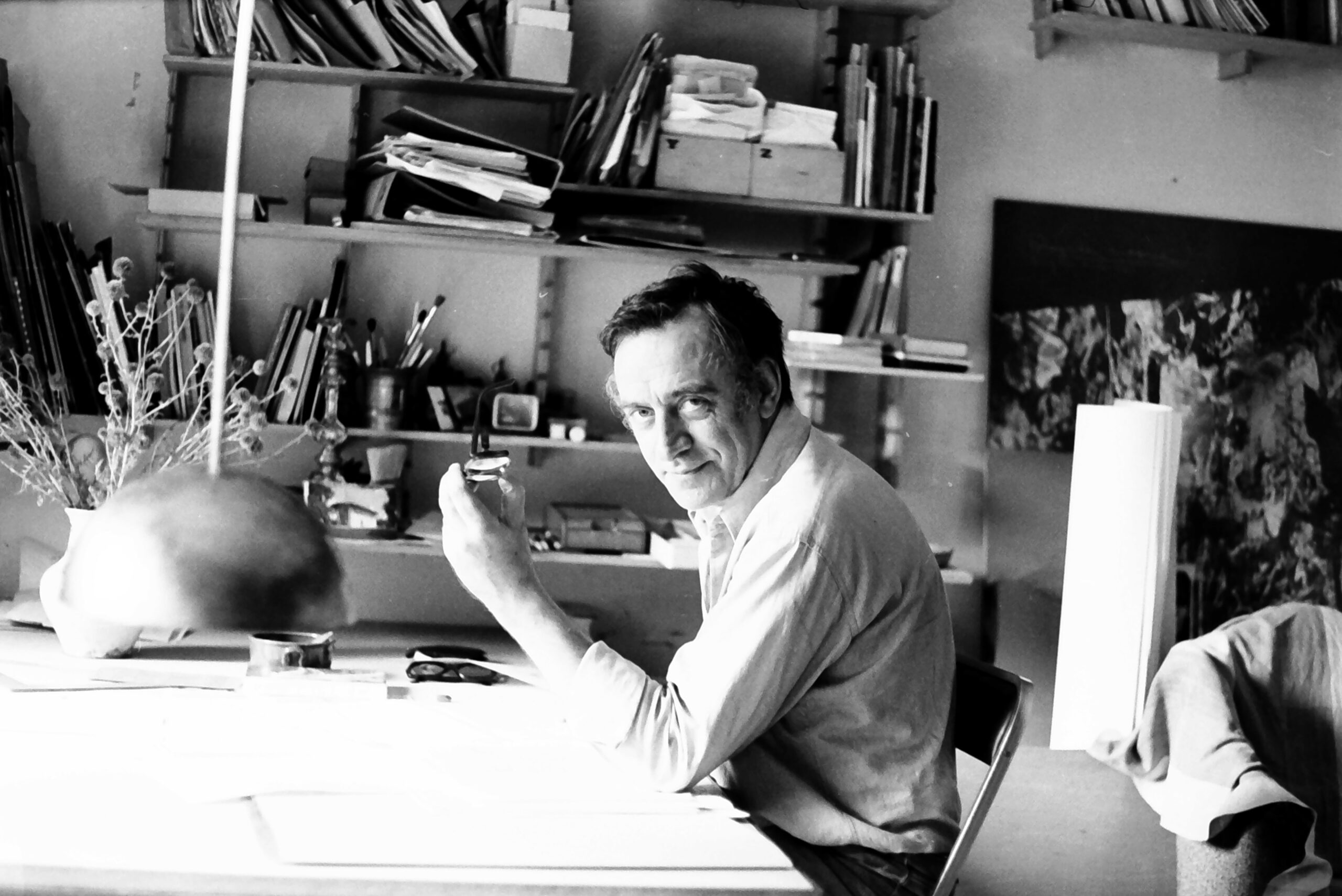
This site is dedicated to Paul Bortnovski (1922-2007), architect, scenographer and university professor, whose professional career influenced the theatre culture in Romania’s second part of 20th century. He has received various prestigious awards for his celebrated accomplishments.
Trained as an architect (Institute of Architecture “Ion Mincu”, Bucharest, 1949), he briefly worked for the Romanian Chamber of Commerce designing Romania’s pavilions at various international trade fairs. Starting in 1956, he dedicated the great majority of his creative activity to the set design of theatre and film productions. He also had significant contributions to the theatre architecture theory, cross pollinating his perspective and experience as a set designer.
His reputation as an architect rests on varied projects, chiefly theatre design, but also on forays into environmental design, monumental architecture, and land art.
Paul Bortnovski’s work for the stage has revealed a thinking which was always tensioned and poetical (even when the poetry was that of derision). The stylistically flexible stage sets designed by him were able to respond and complete the highly diverse visions of such directors as Liviu Ciulei, Dinu Cernescu, Sanda Manu, Valeriu Moisescu, Lucian Pintilie, Horea Popescu, and Crin Teodorescu.
Yet, beyond this propensity for collaborative adaptability, Bortnovski has shown a constant interest in the spatial possibilities of the theatrical performance, in the determinant factors of the visual expression and its processes. Many of his stage sets employ the scenic device, a constructive reorganization of the existing space, having a significant impact on the performance and on the rapport of the performers with the audience.
Bortnovski believes that a scene designer, “rather than being a mere decorator or illustrator”, must take a constructive part in “the shaping of the performance”. His sets are designed to follow the emotional flow of the dramatic action, for which he seeks spatial, kinetic, and visual equivalents. He thus developed a personal concept, that of the design of the emotive state: the concrete visual representation of the subjective moods produced by the dramatic universe of the play and by the director’s vision, exhibiting, nevertheless, a predominant emotion, a fundamental tonality.